Quick Answer: Which One Actually Helps You Learn?
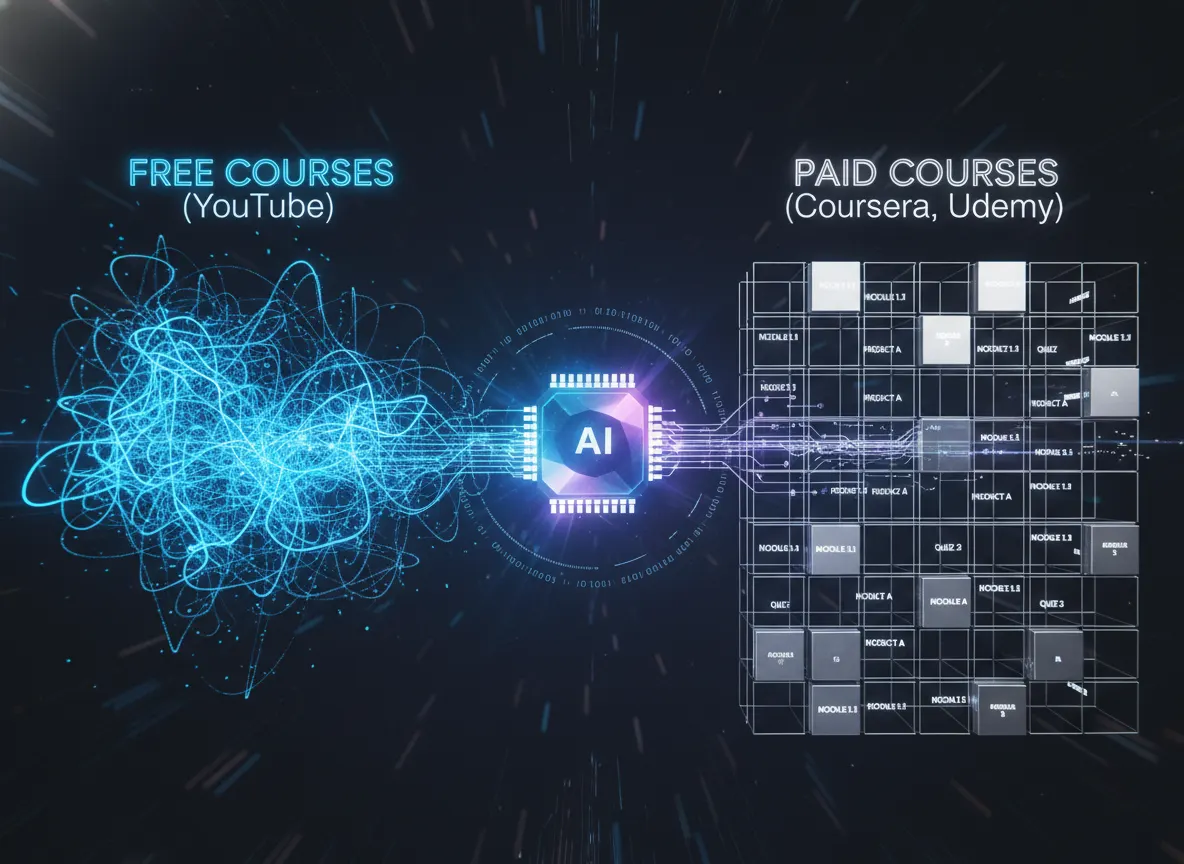
A chat AI is the better drafter: ask it and you get a sensible study plan in seconds, free. LearnPath is the better finisher: it turns videos into a structured path, quizzes you on each one, tracks your progress, and reroutes when you struggle. Use a chat AI to map a topic; use a structured path to actually finish it.
That is the short version. The honest, useful version is that these two tools are not really competing for the same job - and knowing which job you need decides which one wins.
The Side-by-Side Comparison
Here is the head-to-head for a self-learner working from free video content, kept honest in both directions:
| Dimension | Chat AI study plan | LearnPath |
|---|---|---|
| What you get | A one-shot block of text: a week-by-week outline with topic headings and suggested resource links | An ordered path of current YouTube videos, sequenced for your level |
| Structure | Static list; each new ask regenerates fresh text rather than updating a living plan | A living path that tracks where you are and updates as you go |
| Testing / quizzes | None built in | A quiz generated from each video's transcript; 70% to advance |
| Adapts to your results | No - the text never changes on its own | The path branches based on how you score |
| Progress tracking | None - you track it yourself | Built in; your step state is saved |
| Content freshness | Suggested links can be out of date, wrong, or broken over time (link rot) | Videos pulled fresh from YouTube |
| Breadth | Anything - open-ended Q&A on any topic | Narrower - YouTube-only structured learning paths |
| Cost (2026) | Free tier; paid tier around $20/mo for the leading assistant | Free to start, then Pro $12.99/mo or $8.99/mo billed annually ($107.88/yr) |
Read across the rows and a pattern shows up immediately. A chat AI wins on breadth, speed, and price-to-try. LearnPath wins on the parts that happen after the plan exists - testing, memory, and adaptation. Most "which is better" arguments are really arguments about which of those columns matters more for you.
What a Chat AI Study Plan Is Great At
Fairness first, because a chat AI earns its popularity here honestly.
It is instant and free to try. Type "I want to learn data analysis from scratch" and you get a structured week-by-week outline in seconds, on a free tier, for almost any topic you can name. Going from a blank page to a credible map of the territory used to take an afternoon of searching. Now it takes one prompt.
It is extremely flexible. This is the thing a structured tool genuinely cannot match. A chat AI will draft a plan on any subject - underwater welding, Byzantine history, Rust - and then answer your follow-up questions in the same conversation. "Explain step three differently." "I only have five hours a week, compress it." "What if I already know the basics?" That open-ended back-and-forth is real value, and it is the chat format's home turf.
The sequencing is usually reasonable. Ask for a beginner-to-job-ready order and you tend to get a defensible one: fundamentals, then the core skill, then a project. For orientation - figuring out roughly what to learn and in what order - a chat AI is a fine place to begin.
If orientation is all you need, you can stop reading here and go prompt one. The trouble is that orientation is maybe a tenth of learning a skill. The other nine tenths is execution, and that is where a block of text stops helping. We dug into the failure modes in detail in can a chat AI make a study plan; this post is about what to use instead.
Where a Static Plan Breaks Down
The core limitation is structural, not a bug you can prompt your way around: a chat AI study plan is static text with no progress state. It does not store where you are, it does not test you, and it does not change based on whether you actually learned anything. Each new ask regenerates fresh text rather than updating a living plan. Three concrete failures fall out of that.
The links rot - or were never quite right
A chat AI lists resource links from its training and, increasingly, from a live search. Both can produce links that are dead, renamed, or pointing at a different video than the description claims. And even the good links decay. A Pew Research Center analysis found that 38% of webpages that existed in 2013 were no longer accessible a decade later, and a quarter of all pages sampled across that decade had simply disappeared. A plan written once, in a chat thread, cannot notice when the video at step seven goes private on day twelve. Nobody is checking it but you.
Nothing tests whether you learned anything
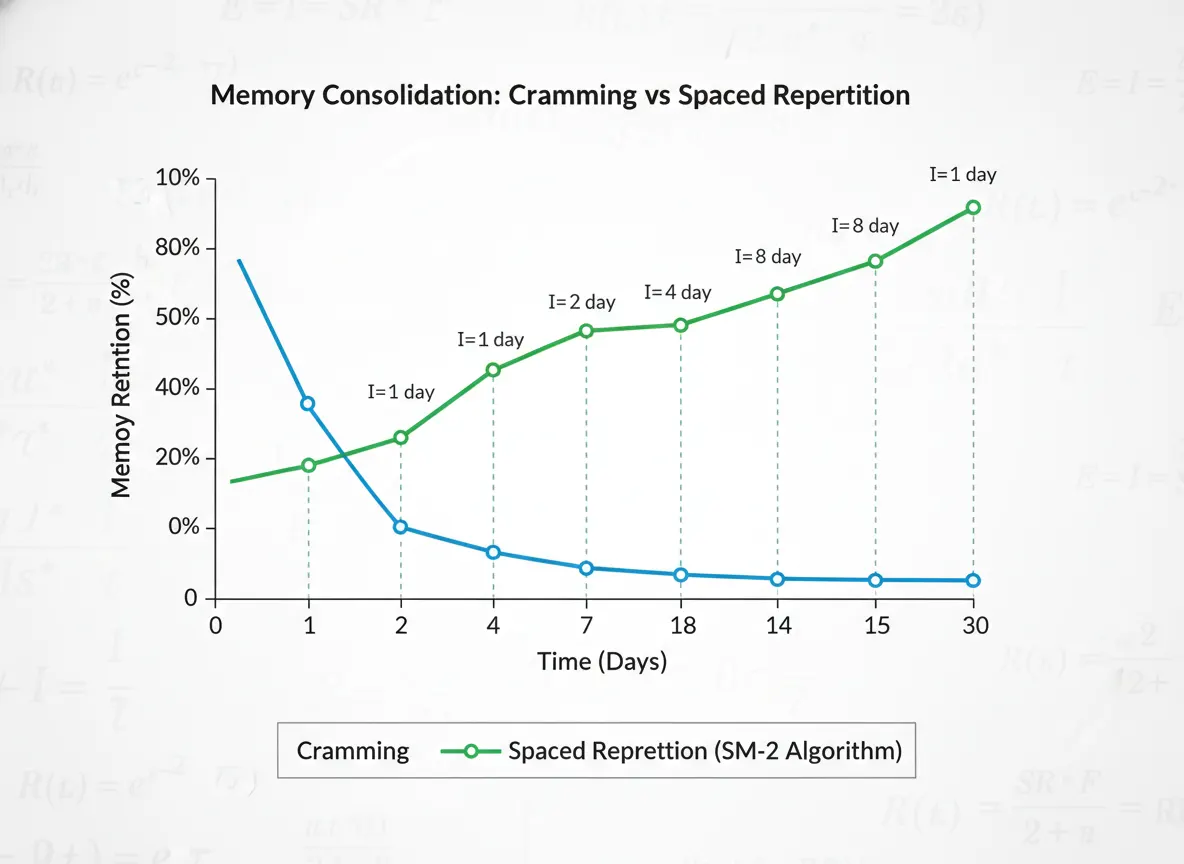
A static plan says "watch this, then watch that." It never asks you a question about what you watched. That matters more than it sounds, because being tested is one of the strongest known levers for retention. A 2017 meta-analysis of practice testing found that practice tests produced a moderate gain over simply restudying material (about a 0.51 effect size) and a large gain (about 0.93) over no testing at all. In plain terms: being quizzed beats re-reading a list. A plan with no questions in it checks completion, not comprehension - you can tick every box and still freeze in front of a blank editor.
The plan never reacts, and the chat window is where it dies
Real learning is not linear. You breeze through one topic and hit a wall at the next. A static plan treats both the same: next item, please. There is no mechanism that notices you are struggling and adds reinforcement, or notices you are flying and skips ahead - the case for responsive sequencing is laid out in what makes adaptive learning work. On top of that, the plan lives in a conversation that scrolls away. No saved state, no record of what you finished, and a new chat starts from scratch. You become the tracking system, and that is the role most self-learners quietly abandon. It shows up in the numbers: across the open online courses in one large study, completion rates ranged from 0.7% to 52.1%, with a median of just 12.6%. Most people who start self-directed learning never finish it, and a plan with no follow-through built in does nothing to change that.
What a Structured Path Adds
This is the job LearnPath was built for, so here is the mechanism in plain terms - one honest section, not a sales pitch.
You give it a topic and your level. It searches YouTube and curates a sequenced path from current uploads, so the source material reflects what practitioners published recently rather than a list frozen at writing time. Then it adds the three things a block of text lacks:
- Testing. Each step has a quiz generated from that video's own transcript, so the questions test what the video actually taught, not generic trivia. You need 70% to unlock the next step. That bakes in the retrieval practice the research above rewards.
- Saved progress. Your path is a living thing with state, not a message you will lose. Where you are, what you cleared, and what is next are all kept for you, so the plan survives past week two.
- Adaptive branching. Stumble on a quiz and the path reroutes to shore up the gap before moving on. The plan you need on day ten is not one a chat AI can fully write on day one - because on day one it does not yet know where you will struggle.
The full pipeline is documented in how LearnPath works. Building a path is free, so you can see the plan it makes for your topic before you pay anything. Pro is $12.99/month, or $8.99/month billed annually ($107.88/year); the first 50 founding subscribers lock a lower rate - $8.99/month, or $5.99/month annually - forever. All prices as of June 2026.
What LearnPath Gives Up
A comparison you can trust has to say where the other side wins, so here it is plainly. LearnPath is narrower than a general chat AI. It is YouTube-only and built specifically for structured learning paths, not open-ended question-and-answer on any subject. If you want to brainstorm, debug a single problem, or get a one-paragraph explanation of an idea, a chat AI is the right tool and it is not close.
LearnPath also has an upgrade wall: building a path is free, but learning all of it means going Pro. A chat AI's free tier, by contrast, will keep drafting plans all day at no cost. And for a small number of disciplined people - the ones who genuinely will write their own quizzes, verify every link, and keep a progress tracker by hand - a free chat plan plus that discipline is a complete system. Most people are not those people, but some are, and they should keep their money.
When to Use Which
You do not have to pick a side. The honest call is situational.
Use a chat AI when:
- You need orientation fast - a rough map of what to learn and in what order.
- Your topic is niche or unusual and you mainly need explanations and back-and-forth, not a video curriculum.
- You are budget-zero and willing to be your own link-checker, quiz-writer, and progress-tracker.
- You want a thinking partner for a single concept or problem rather than a multi-week course.
Use a structured path like LearnPath when:
- You have tried plans before and stalled - the problem is follow-through, not finding a plan.
- You want to be tested, not just told what to watch, because you have felt the gap between "understood the tutorial" and "can do it myself."
- You want the sequence to react when you struggle instead of marching on.
- You are learning a fast-moving technical skill and want current video, not links that may already be stale.
A useful way to combine them: let a chat AI sketch the territory and answer your stray questions, then run the actual learning on a structured path that tests and tracks you. If you have understood tutorials but stalled when building alone, that gap is the whole reason a structured path exists, and we unpack it in why you understand tutorials but can't build alone.
The bottom line is simple. A plan is the easy ten percent of learning a skill. Whatever you choose, make sure something in your system owns the other ninety percent - the testing, the memory, and the course-correction. A chat AI is brilliant at handing you the map. It just will not drive.
Frequently Asked Questions
Can a chat AI make a good study plan?
Yes, and it is genuinely useful. Ask a chat AI and you get a sensible week-by-week outline in seconds, on a free tier, on almost any topic. The catch is what comes after: the plan is a static block of text. It does not test you, does not save your progress, and does not change when you struggle - and the resource links it lists can be out of date or broken.
What does LearnPath do that a chat AI study plan does not?
Three things a block of text cannot. It tests you with quizzes built from each video's own transcript, it saves your progress so the plan is a living thing instead of a lost chat thread, and it branches the path based on how you score. The videos are also pulled fresh from YouTube, so the source material stays current.
Is a free AI study plan good enough on its own?
For a disciplined self-starter who will write their own quizzes, verify every link, and track progress by hand, maybe. For most people, no - the plan is the easy part, and follow-through is where self-directed learning falls apart. Across the open online courses in one large study, the median completion rate was just 12.6%. Testing and saved progress are what carry you to the end.
Does a chat AI study plan track my progress?
No. A chat AI returns a one-shot block of text and then forgets it. There is no saved state, no record of which steps you finished, and a new chat usually starts from scratch. You become the progress tracker - which is exactly the administrative job most self-learners abandon by week two. Durable tracking has to live outside the conversation.
Why do the video links in AI study plans stop working?
Two reasons. A chat AI can list links that were never quite right, and even good links decay over time. One analysis found 38% of webpages that existed in 2013 were gone a decade later. A static plan written once cannot notice when a video is renamed, made private, or deleted, so click-test every link the day you reach it.
Which is better for learning, a chat AI or LearnPath?
Neither wins outright - they do different jobs. A chat AI is the better drafter and the more flexible tool: instant, free to try, and able to answer any follow-up. LearnPath is the better finisher: structure, transcript-based quizzes, saved progress, and adaptive branching on current YouTube videos. Use a chat AI to map a topic; use a structured path to finish one.